

Those fine red, blue, or purple lines that sit just beneath the surface of the skin are spider veins and they are incredibly common. While they rarely indicate a serious medical issue, many people want them treated for cosmetic reasons, especially when they appear on the legs, face, or chest.
At the Vein Institute of New Jersey, we spend a lot of time helping patients overcome varicose veins, but cosmetic spider vein treatment deserves its own conversation. With several effective options available, it’s helpful to understand the differences so you know what to expect before, during, and after treatment.
Why Do Spider Veins Form?
Spider veins develop when tiny veins dilate or become damaged due to factors such as genetics, hormones, pregnancy, sun exposure, or prolonged standing. In most cases, they’re harmless, but if you also have heaviness, aching, swelling, or bulging veins, it may be recommended to get an ultrasound to rule out underlying venous insufficiency before cosmetic treatment.
1. Injection Sclerotherapy: The Gold Standard
What It Is
Injection sclerotherapy is the most common and most effective treatment for spider veins—particularly on the legs. It involves injecting a small amount of a medical solution (sclerosant) directly into the visible vein.
How It Works
The sclerosant irritates the vein lining, causing the vessel walls to seal shut and eventually fade as the body absorbs it.
Where It Works Best
- Legs (thighs, calves, ankles)
- Some areas on the chest
- Occasionally on the arms
Procedure Experience
- Performed in-office
- Very small needle
- Minimal discomfort—often described as a quick pinch
- Takes 15–30 minutes depending on the number of veins
Recovery
- No downtime
- Compression stockings typically recommended
- Mild redness or bruising may occur and fades quickly
- Multiple sessions are often needed for best cosmetic results
Why We Recommend It Often
Injection sclerotherapy delivers predictable, reliable outcomes for the majority of spider veins and remains the first-line treatment for leg veins.
2. Foam Sclerotherapy: Great for Clustered or Slightly Larger Spider Veins
What It Is
Foam sclerotherapy uses the same medication as injection sclerotherapy, but mixed with air to create a foam consistency.
How It Works
The foam fills the vein more completely than a liquid injection, making it especially useful for veins that are slightly larger or appear in concentrated clusters.
Where It Works Best
- Medium-size spider veins
- Blue reticular veins often associated with spider vein networks
- Areas where veins respond better to a thicker solution
Procedure Experience
- Similar to traditional sclerotherapy
- Quick, in-office treatment
- Allows for precise placement and effective coverage
Recovery
- Very similar to liquid sclerotherapy
- May see some temporary darkening before veins fade
- Multiple sessions may be needed
Why We Use Foam
Foam can provide enhanced results for veins that liquid sclero may not fill fully. It’s not necessary for all cases, but it’s an excellent tool when appropriate.
3. Laser Therapy: Best for Very Tiny or Delicate Spider Veins
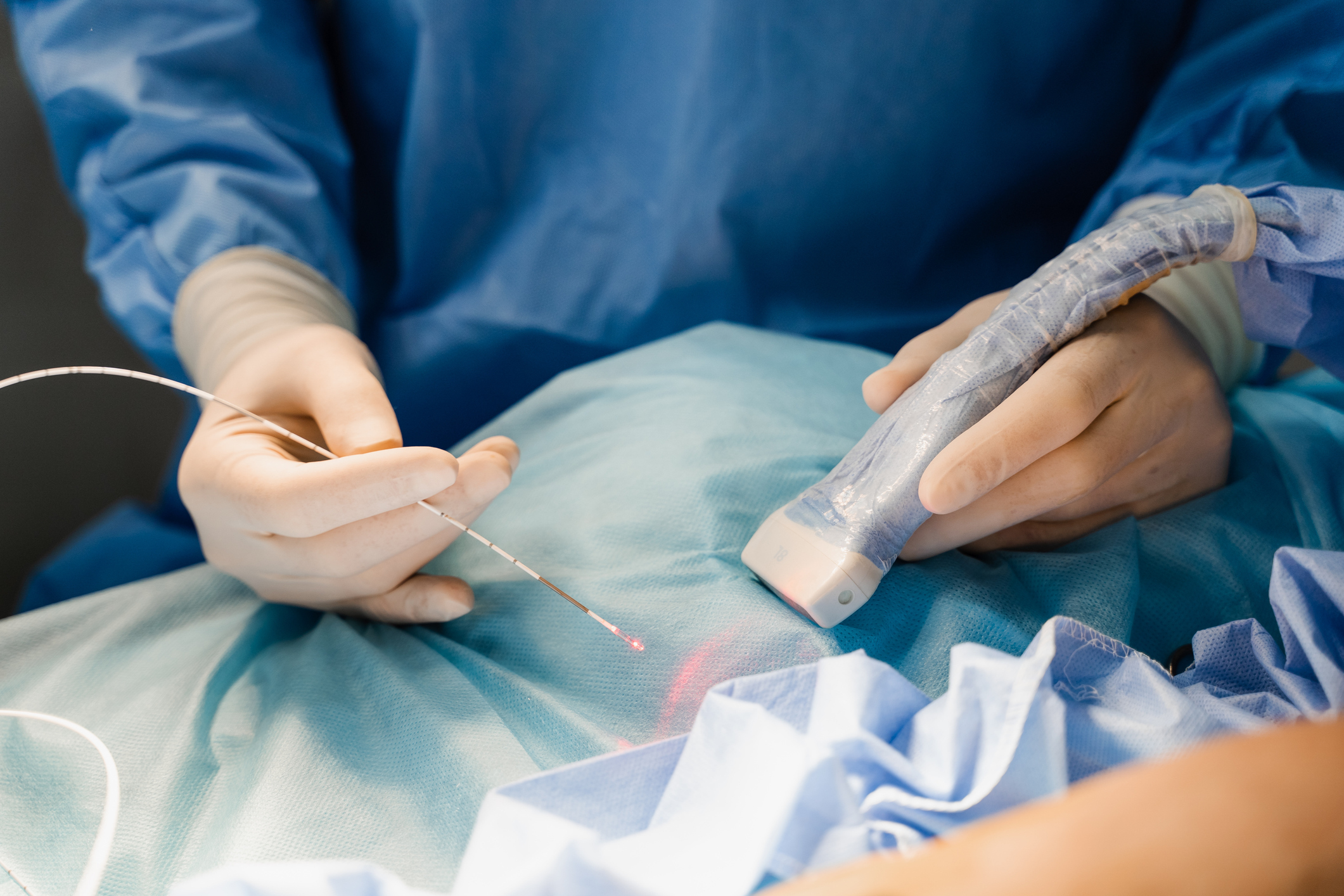
Laser therapy treats spider veins by sending light energy through the skin to target tiny blood vessels.
When Laser Is Most Appropriate
Laser treatment is ideal when veins are too small to insert a needle into, which often occurs in delicate areas such as:
- Face
- Breasts and low neckline areas
- Occasionally the ankles or very fine clusters
Important Note About Our Practice
At the Vein Institute of New Jersey, laser therapy is performed only in our Morristown office and is used selectively. We do not position laser treatment as better than sclerotherapy. It’s just different and best reserved for certain types of veins or anatomic areas.
Procedure Experience
- Quick pulses of light target the vein
- Feels similar to a rubber-band snap
- No needles
- Sessions are generally short
Recovery
- Slight redness or swelling for 24–48 hours
- Sun protection is essential after facial treatments
- No downtime, but veins may take a few weeks to fade
Who Benefits Most
Patients with tiny facial veins, fine telangiectasias, or veins in sensitive, needle-unfriendly areas.
What’s the Best Treatment for Spider Veins?
The best treatment depends on:
- Location of the veins
- Size and depth of the veins
- Skin type and sensitivity
- Patient goals
- Whether underlying vein issues are present
Most patients respond best to injection sclerotherapy, with or without foam. Laser is an excellent supplemental option for extremely fine or delicate veins—especially on the face.
A personalized consultation is always the first step. This ensures your provider selects the right modality (or combination of treatments) to achieve the clearest, most natural-looking results.
Ready to Treat Your Spider Veins?
Spider veins may be small, but they can have a big impact on your confidence. Whether you’re looking to treat leg veins, facial vessels, or tiny clusters that keep returning, our team at the Vein Institute of New Jersey can help you choose the most effective option.
Schedule a complimentary consultation today and let our vascular specialists guide you toward smoother, clearer skin.



.jpg?width=944&name=Castle-Connolly-Top-Doctors-Emblem-Large%20(4).jpg "Castle Connolly Top Doctors emblem")