

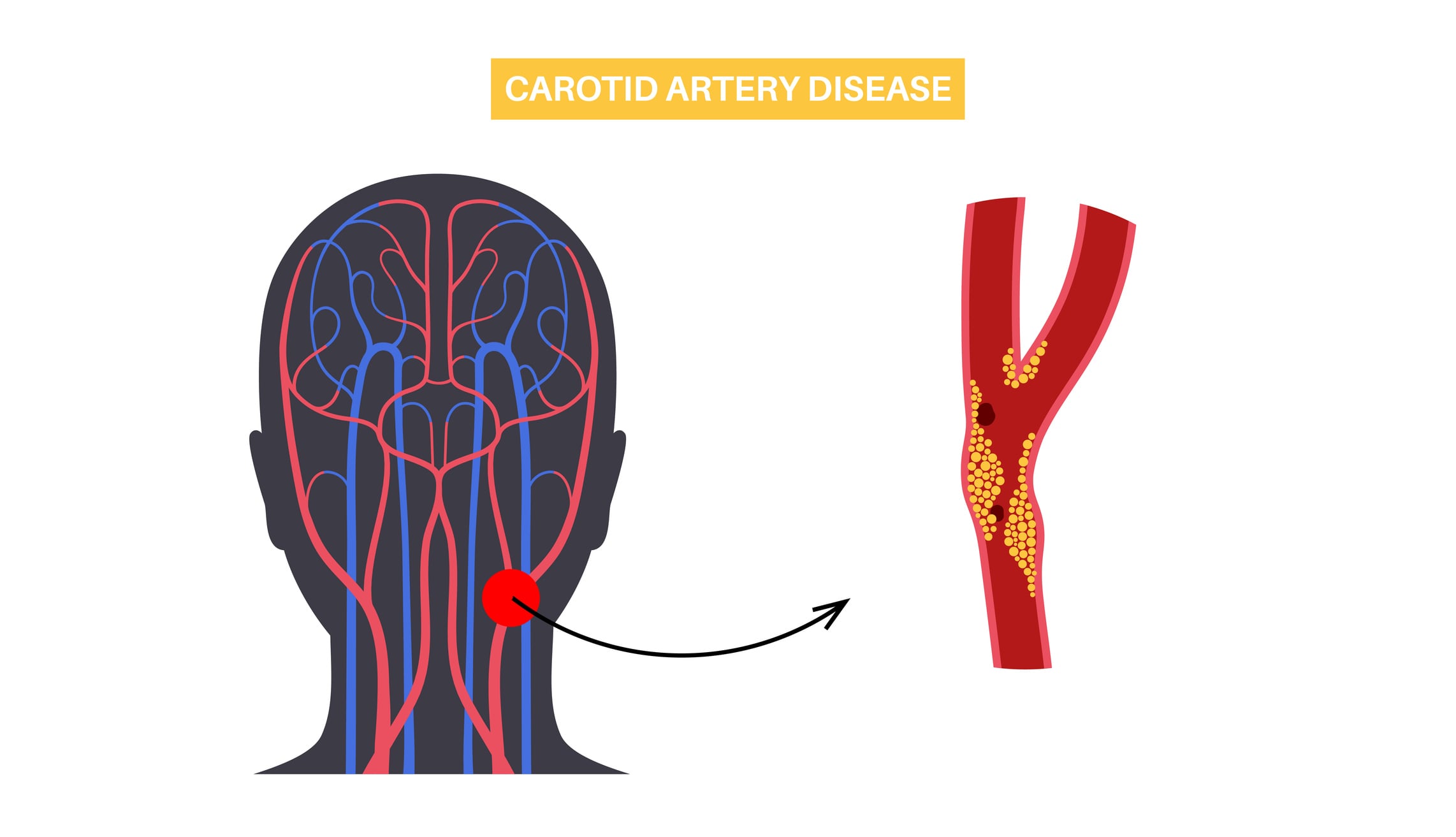
When patients learn they have a blockage in one of their carotid arteries, one of the first questions they ask is, "Do I need to do anything about it?"
The answer depends on the severity of the blockage, your symptoms, and your overall risk factors. However, ignoring significant carotid artery disease can have serious consequences, including stroke, permanent disability, and even death.
Understanding what the carotid arteries do and what can happen when they become narrowed can help you make informed decisions about your vascular health.
What Are the Carotid Arteries?
The carotid arteries are two large blood vessels located on either side of your neck. Their job is to deliver oxygen-rich blood to your brain.
Over time, these arteries can become narrowed by a buildup of plaque, which is a combination of cholesterol, calcium, fat, and other substances found in the bloodstream. This condition is known as carotid artery disease or carotid artery stenosis.
As plaque accumulates, blood flow to the brain may become restricted, and pieces of plaque can break loose and travel to smaller arteries in the brain, causing a stroke.
The Biggest Risk: Stroke
The most significant danger of untreated carotid artery disease is stroke.
A stroke occurs when blood flow to part of the brain is interrupted. Brain cells begin to die within minutes when deprived of oxygen, which can lead to permanent neurological damage.
Depending on the area of the brain affected, a stroke may result in:
- Weakness or paralysis on one side of the body
- Difficulty speaking or understanding speech
- Vision loss
- Problems with balance and coordination
- Memory and cognitive issues
- Permanent disability
- Death
Not every carotid blockage causes symptoms before a stroke occurs, which is why the condition is often referred to as a "silent" disease.
What About a TIA?
Before a major stroke, some patients experience a Transient Ischemic Attack (TIA), often called a "mini-stroke."
A TIA produces stroke-like symptoms that typically resolve within minutes or hours. Common symptoms include:
- Sudden weakness or numbness
- Facial drooping
- Difficulty speaking
- Temporary vision loss in one eye
- Dizziness or loss of balance
Since symptoms disappear, many people mistakenly ignore them. However, a TIA is often a warning sign that a larger stroke may be imminent.
A TIA should always be treated as a medical emergency and evaluated immediately.
Can Carotid Blockages Get Worse?
Yes.
Carotid artery disease is generally progressive, meaning plaque buildup tends to worsen over time unless risk factors are controlled.
Factors that can accelerate progression include:
- Smoking
- High blood pressure
- High cholesterol
- Diabetes
- Obesity
- Lack of exercise
- Family history of vascular disease
A blockage that is mild today may become moderate or severe in the future. Regular monitoring allows your vascular specialist to identify changes before they become dangerous.
Will Medication Alone Fix the Problem?
Medications play an important role in managing carotid artery disease, but they do not remove existing plaque.
Depending on your condition, your physician may prescribe:
- Antiplatelet medications such as aspirin
- Cholesterol-lowering medications (statins)
- Blood pressure medications
- Diabetes management therapies
For many patients with mild or moderate disease, medication and lifestyle changes may be sufficient.
However, when narrowing becomes severe, or when symptoms such as a TIA or stroke have occurred, additional treatment may be necessary to reduce the risk of future events.
When Is Treatment Recommended?
Treatment decisions are based on several factors, including:
- Degree of blockage
- Presence of symptoms
- Age and overall health
- Stroke risk
- Results of vascular imaging studies
At the Vein Institute of NJ at The Cardiovascular Care Group, evaluation often begins with a noninvasive carotid ultrasound performed in our accredited vascular laboratories. This painless test helps determine the severity of narrowing and guides treatment recommendations.
For patients with significant disease, treatment options may include:
Carotid Endarterectomy
This surgical procedure removes plaque from inside the artery, restoring normal blood flow to the brain.
Carotid Artery Stenting
In select patients, a minimally invasive stent may be placed to help keep the artery open and improve blood flow.
TransCarotid Artery Revascularization (TCAR)
A newer innovative and less-invasive procedure involving direct access to the carotid artery much like a Carotid Endarterectomy, but through a much smaller incision.
Your vascular specialist will determine which option is most appropriate based on your anatomy, symptoms, and medical history.
Don't Wait for Symptoms
One of the most dangerous misconceptions about carotid artery disease is believing that "if I feel fine, everything must be okay."
Many patients experience no warning signs until a stroke occurs.
If you have risk factors such as high blood pressure, diabetes, smoking history, elevated cholesterol, heart disease, or a family history of vascular disease, screening and evaluation may help identify carotid disease before it causes serious complications.
The Good News
Untreated carotid artery disease can increase your risk of stroke, disability, and potentially life-threatening complications. While not every blockage requires surgery, significant narrowing should never be ignored.
The good news is that early detection, ongoing monitoring, lifestyle changes, medication management, and advanced vascular treatments can dramatically reduce your risk and help protect your brain health for years to come.
If you have been diagnosed with carotid artery disease or have risk factors that place you at increased risk, the vascular specialists at the Vein Institute of NJ at The Cardiovascular Care Group can help determine the best course of action through comprehensive evaluation and individualized treatment planning.



.jpg?width=944&name=Castle-Connolly-Top-Doctors-Emblem-Large%20(4).jpg "Castle Connolly Top Doctors emblem")